



We know that in summer the beach is very tempting, but also that it would be a shame if you returned from your holiday without having seen the most beautiful villages of Ibiza and the spots that make them unique. While you discover why they call it the White Island, you can also browse in markets and boutique shops, follow in the footsteps of the old hippies and visit attractive spots and photogenic churches. Don’t just lie in your hammock: let’s hit the road!
Touring Ibiza from village to village will give you the opportunity to explore the more rural, calm and authentic side of the island. As you leave the main roads and take the secondary roads in search of the small towns that dot the interior, you’ll discover along the way the traditional Ibiza cottages, with their unique architecture, as well as the traditional agricultural landscape of farmlands dotted with almond and olive trees, carob trees and fig trees. Not forgetting the dense pine forests that colour the mountains and hills of the island green.

Why are Ibiza’s towns and villages pretty?
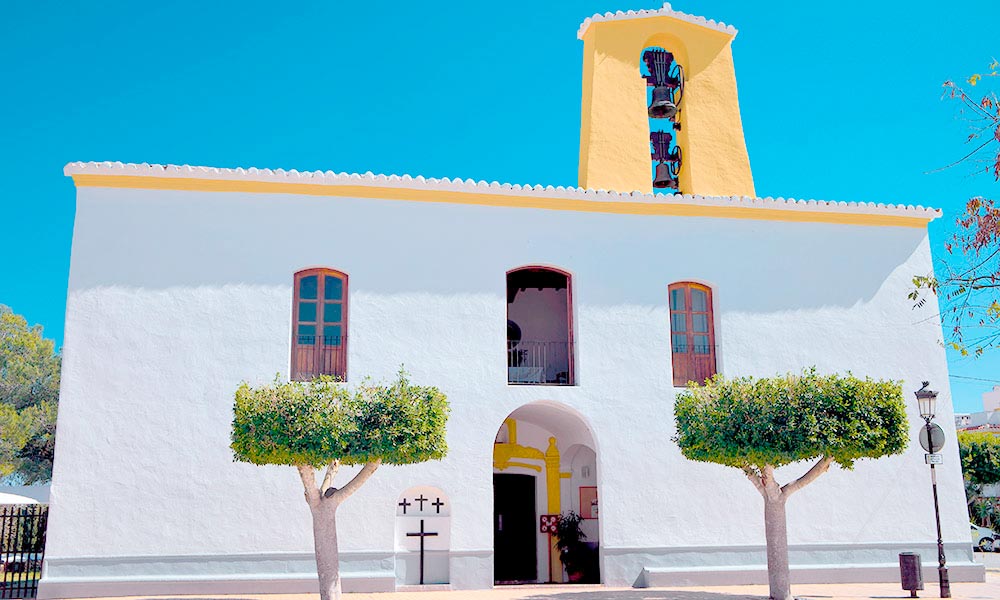

Santa Gertrudis, Ibiza
One of the island’s unique features lies in the fact that up to the middle of the last century, most of the towns and villages of Ibiza comprised just one church, one shop that also served as a bar and post office, and a few houses around this enclave. Its inhabitants lived spread out over the territory on self-sufficient estates that worked until Sunday came, when they would meet at church and socialise under their porch. The only towns and villages that were more developed were Sant Antoni de Portmany and Santa Eulària des Riu, which ended up becoming Ibiza’s main tourist centres.
Ibiza, from village to village
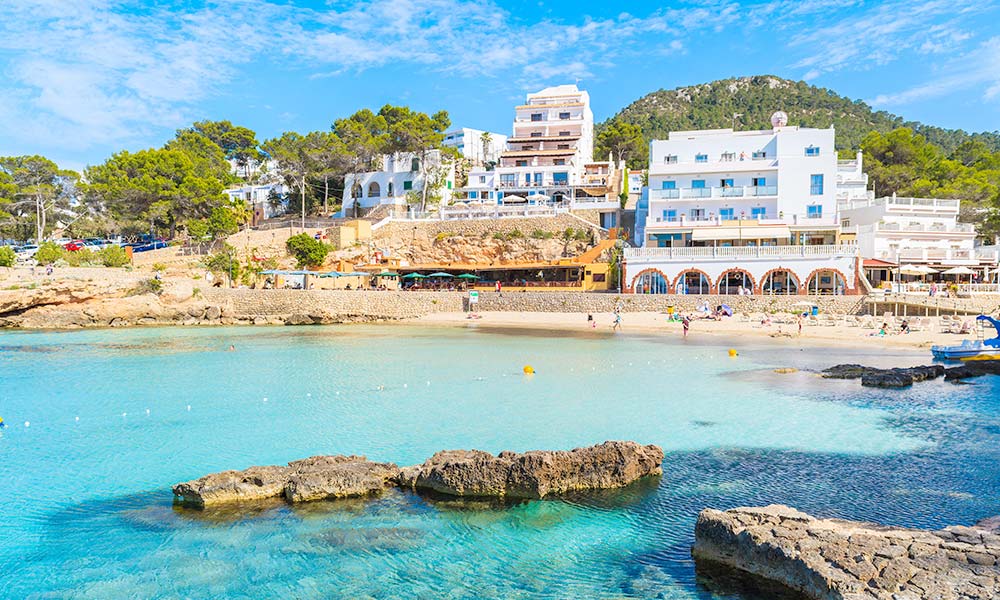
An excellent way to visit the different towns and parishes of Ibiza in summer is to include two or three stops when you stop off at the most beautiful coves and beaches of Ibiza, those that you’ll surely not want to miss. For example, if you go to the beaches of the north-west, visit Santa Agnès, Sant Mateu and Sant Miquel. If you go to the north-east, stop at Sant Llorenç de Balfia, Sant Joan and Sant Vicent. When you head to the beaches and hippie markets on the east, include Sant Rafel, Santa Gertrudis, Santa Eulalia and Sant Carles. When you want to visit Cala d´Hort or Ses Salines, two of the most famous beaches in Ibiza, you can discover Sant Jordi and Es Cubells. And when you head to the essential coves of western Ibiza, you can take the opportunity to discover Sant Josep, Sant Agustí and Sant Antoni. Without forgetting that just under 3 km from the town of Ibiza, the village of Jesús awaits you.
Why do they call Ibiza the White Island?
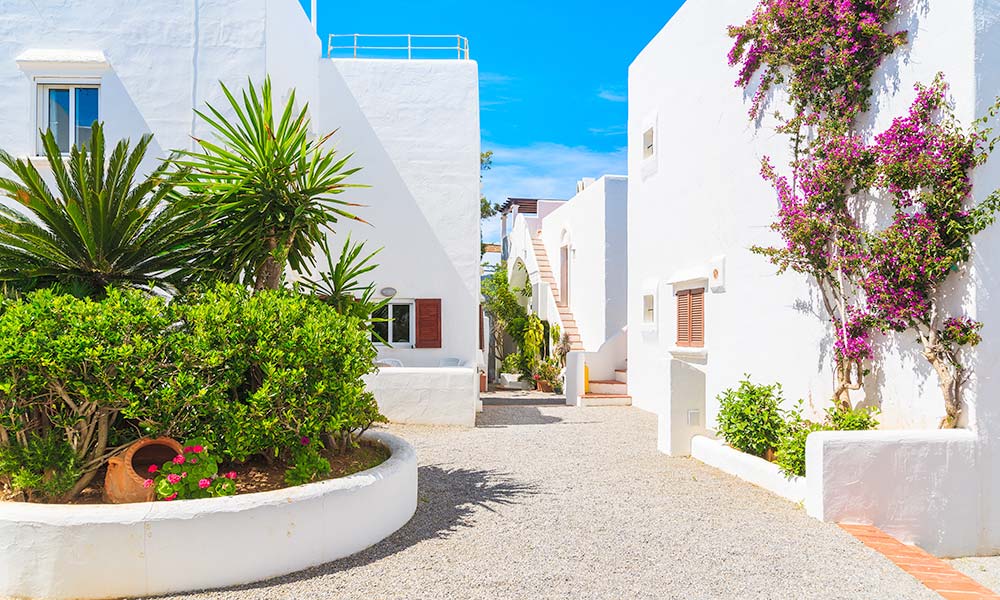
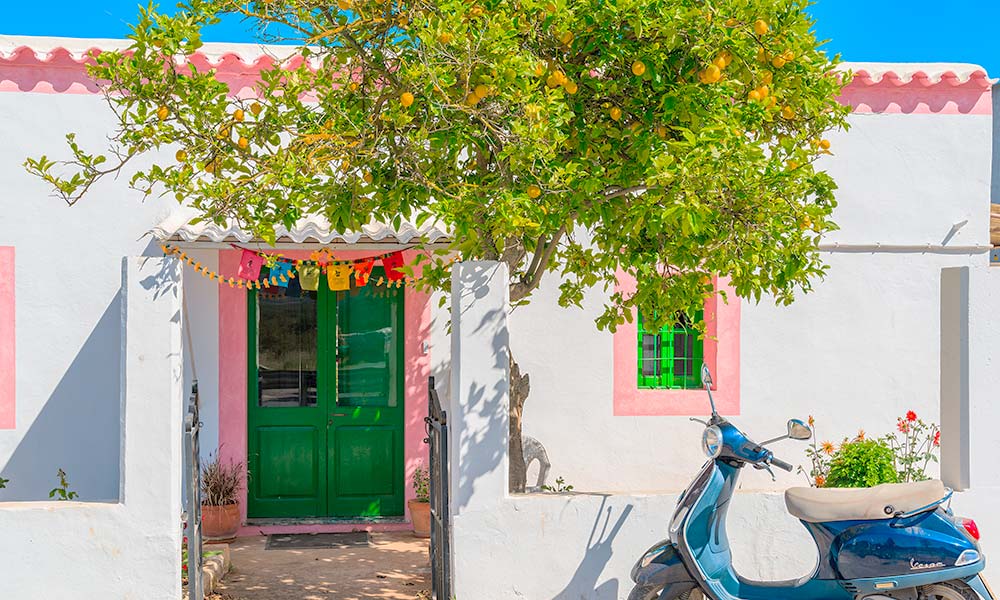
The nickname for which Ibiza is popularly known today was born at the beginning of the 20th century, after a trip that the Catalan artist Santiago Rusignol made in August 1912. After his trip, which impressed him very much, he described it as “the white island”, although it was not until the 1940s that it began to be used as a slogan in tourism promotion campaigns. The whiteness that Rusignol referred to comes from its traditional architecture, which both in the country houses and in the small towns and churches of Ibiza means walls whitewashed with lime and buildings with a few small windows.
What are the most authentic towns and villages in Ibiza?

Sant Miquel de Balansat, Ibiza
In total, Ibiza has 15 villages in its territory, some of which remain practically the same as a century ago. If you want to know what the old villages of the island were like, you have to include the following stops on your tour of the towns of Ibiza, where you can also enjoy traditional cuisine and go shopping:
Santa Agnès de Corona
It is located less than 9 miles from Amàre Beach Hotel Ibiza, in a pretty valley dotted with almond trees. Its church has two access doors, which is interesting because the temple is small. The reason? in 1870, a crime occurred next to the then main door, which is located under the arcade, and the congregation refused to use this door, so the one facing the road was opened.
Where to eat: Try the famous vegetable omelette at Can Cosmi.
What to see: The valley, dotted with almond trees and with some examples of typical traditional houses.
Sant Mateu d’Albarca
The wine making valley of Sant Mateu is home to this tiny village comprising the church, two houses and two restaurants. We recommend you arrive from the road that runs behind the Santa Agnès Church, which provides a pretty view of Sant Mateu Church appearing in the distance.
Where to eat: At the restaurant Ses Cassetes overlooking the church you can try Ibizan dishes.
What to see: Visit the Can Maymo winery, 1.5 km from the church.
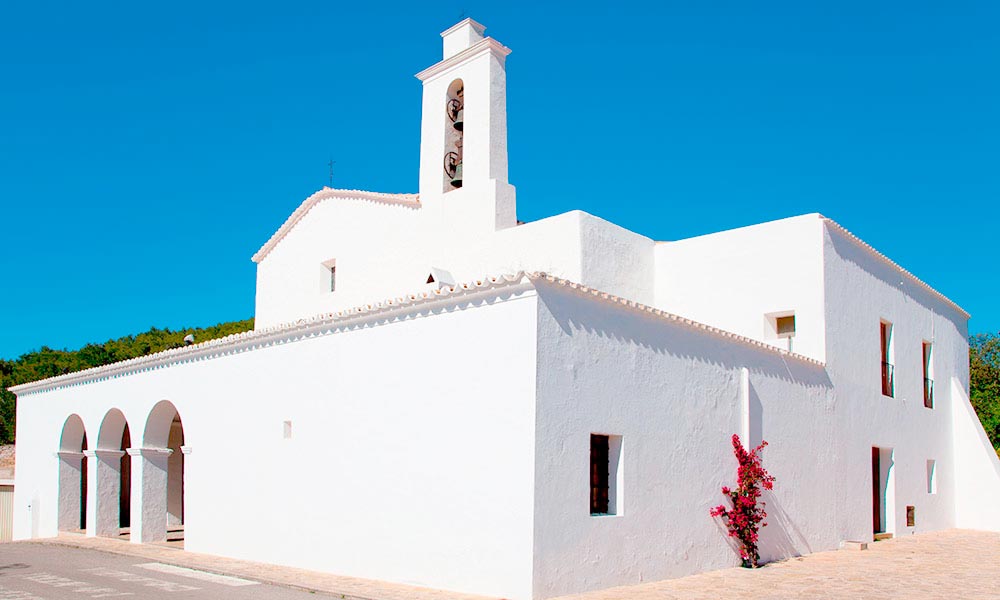
Sant Mateu d’Albarca
Sant Agustí des Vedrà
Less than 5 kilometres separate Cala de Bou from one of the most charming villages in Ibiza, a village with beautiful architecture located on top of a hill that also has two very special restaurants: Can Berri Vell and Bar Can Berri.
What to see: Its excellent examples of traditional Ibizan architecture.
Es Cubells
When you travel through southern Ibiza, be sure to make a detour to visit this small village whose church looks out to the cliffs of Es Cubells and is the only one located by the sea (apart from the Cathedral).
Where to eat: You’ll find the best Ibizan seafood cooking at Ses Boques, located by the sea and at the foot of the cliffs.
What to see: Relax on its viewing point with beautiful views of this part of the south coast of Ibiza.
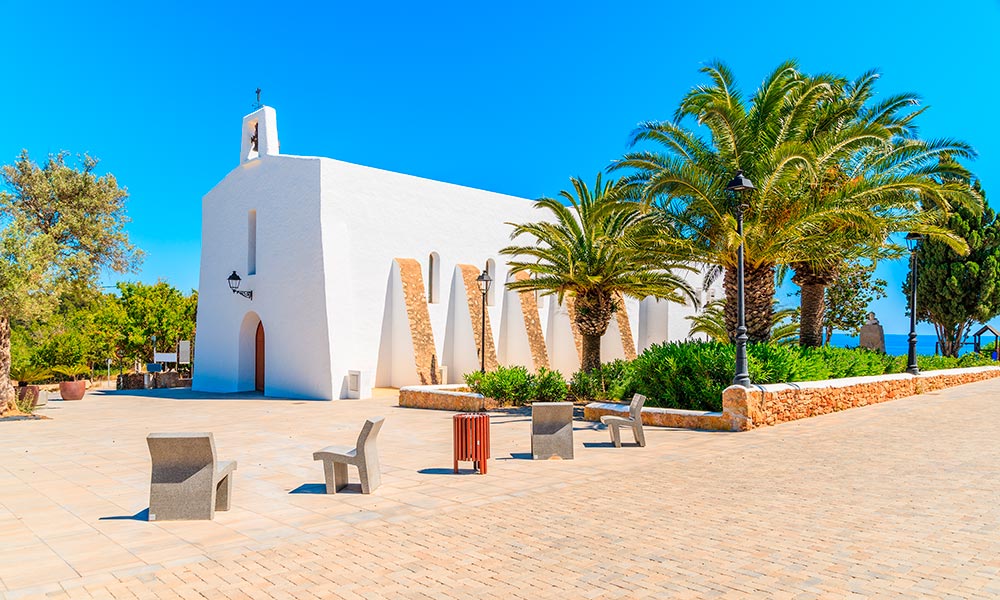
Es Cubells, Ibiza
Sant Vicent de sa Cala
The most remote village on the island comprises just its church, the priory and a restaurant situated behind the temple. The road that reaches this point runs through the Mala Costa Sierra, showcasing excellent examples of traditional houses.
Where to eat: In Can Gat, on the beach of Sant Vicent, known for the quality of its fish and its Ibizan specialities.
What to see: The site of the Punic Sanctuary in a cave at Culleram, more for the walk than for the few relics that remain on show.
Sant Llorenç de Balàfia
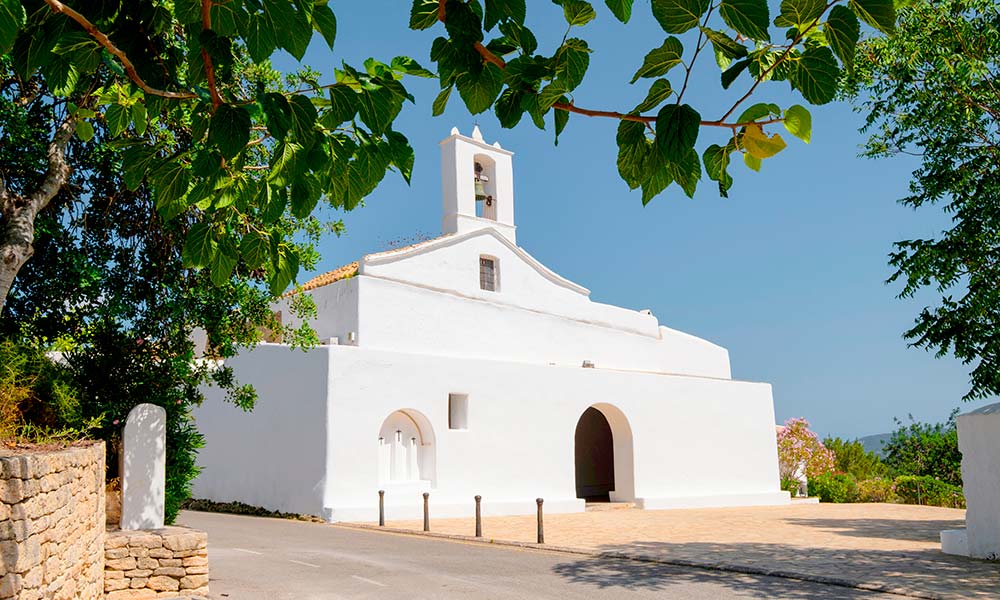
Sant Llorenç de Balàfia
Its simple church with a single arch in the portico is visible when you arrive on the Santa Gertrudis road. One kilometre away is the town of Balfia, a unique settlement formed by five houses and two defensive towers considered one of the best examples of traditional architecture in Ibiza.
Where to eat: At restaurant Es Pins, on the Sant Joan road, you can enjoy Ibizan cuisine, as well as one of the best aliolis on the island.
What to see: At the Es Amunts Interpretation Centre you can learn about the natural and ethnographic features of this important Area of Special Protection, which extends through the municipalities of Sant Joan and Sant Antoni.
The other charming towns and villages of Ibiza
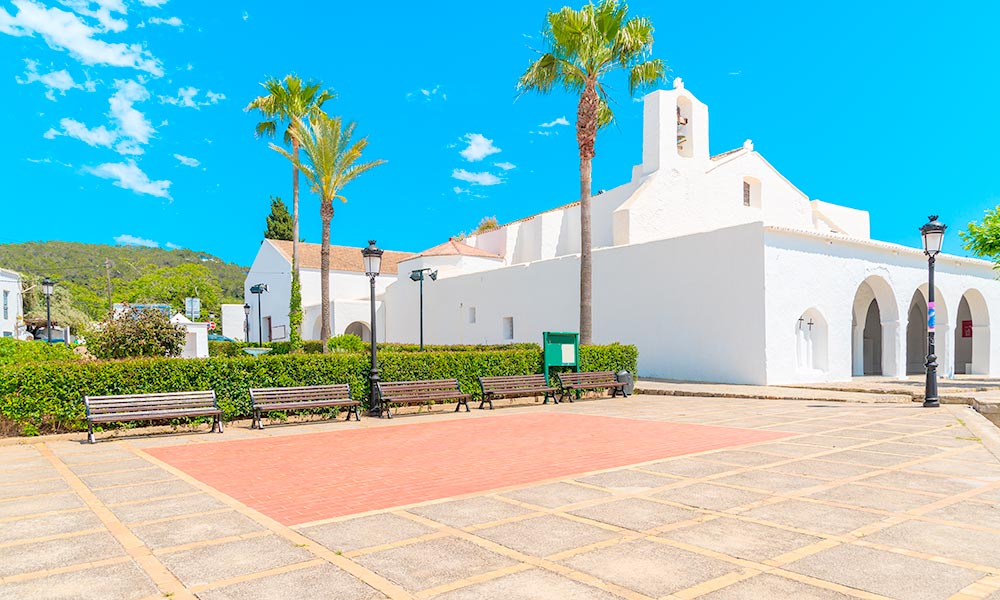
Sant Carles de Peralta, Ibiza
There are still many more must-see towns and villages of Ibiza that you must include on your routes in northern, eastern and southern Ibiza.
Santa Gertrudis de Fruitera
This has become the chicest town in Ibiza thanks to its cosmopolitan atmosphere, its boutique shops and restaurants. After visiting its church, don’t forget to visit the legendary Bar Costa, whose interior is decorated with dozens of paintings by hippy artists who arrived in Ibiza in the 60s and 70s.
Where to eat: Stop at lunchtime to try the famous ham sandwiches at Bar Costa.
Where to shop: In its pedestrian street you’ll find tempting fashion and home decoration shops. In addition, from June to September a craft market is held on Friday evenings.
Galleries and museums: In Santa Gertrudis, Parra & Romero Ibiza Gallery offers exhibitions open to the public.
Sant Miquel de Balansat
Its beautiful fortified church is a must-see. We recommend you visit on Thursday afternoon, when representations of ball pagès, Ibiza’s traditional dance, are held in its courtyard. Don’t leave without having a beer at Can Xicu, one of Ibiza’s centuries-old bars/shops.
Where to eat: For Ibizan seafood, visit Port des Miquel and order the bullit de peix fish stew at Port Balansat.
What to see: The views from the Torre des Molar (6 km) and the Karst cave of Can Marça (4.5 km), with its curious formations of stalagmites and stalactites.
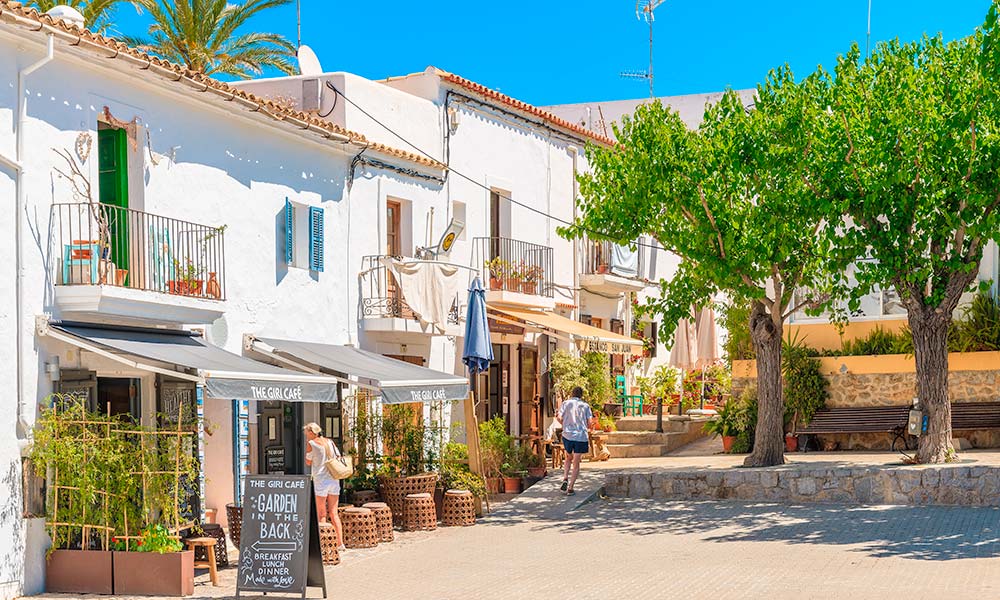
Sant Joan de Labritja, Ibiza
Sant Joan de Labritja
This charming village in the north of Ibiza is on the way to Cala Benirras, one of the most famous beaches in Ibiza. If you visit on Sunday morning, around its church and the road you’ll find a charming market of crafts and organic products.
Where to eat: If you want to eat at a traditional Sant Joan spot, visit Vista Alegre.
What to see: Discover on a hiking trail the coastal landscape that leads to Punta Moscarter and the lighthouse of Portinatx, the highest in the Balearic Islands.
Sant Carles de Peralta
A must-see thanks to the Las Dalias Hippy Market that is held in the outskirts and the bar Casa Anita, one of the enclaves of hippy Ibiza that is still preserved (check out the post boxes and its old telephone box).
Where to eat: Enjoy rice dishes, bullit de peix fish stew and other Ibizan dishes at restaurant Can Pou des Lleo, located 5 km from the village.
Where to shop: At the Las Dalias market, one of the essential visits in Ibiza.
What to see: Visit the Trull Museum in Ca n’Andreu, an exceptional example of traditional rural Ibiza housing that preserves, among other elements, an 18th century oil mill.
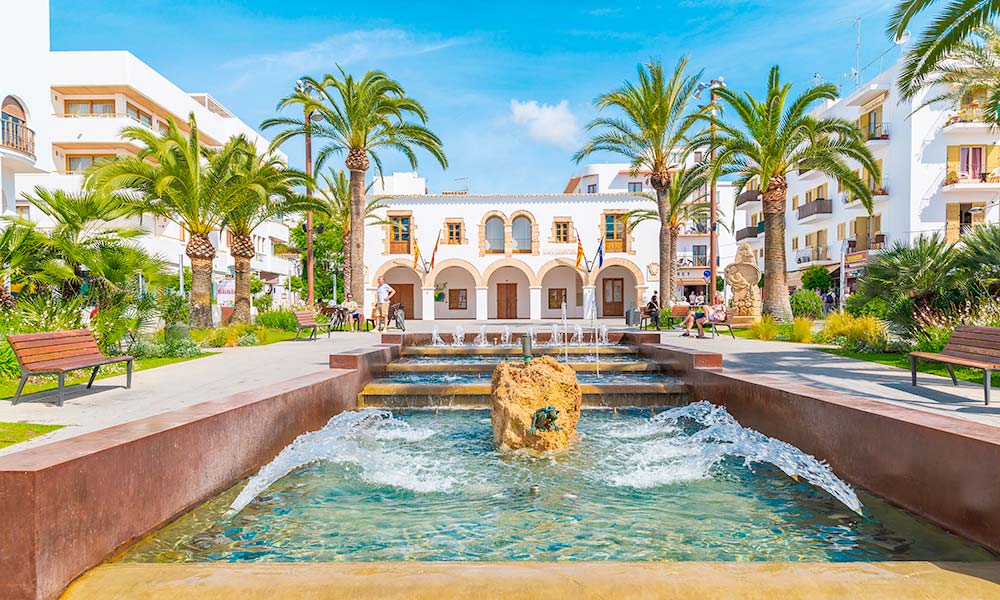
Santa Eulària des Riu, Ibiza
Santa Eulària des Riu
It is undoubtedly one of the towns in Ibiza that you cannot miss, since it is the home of Puig de Missa, an excellent example of an Ibizan fortified church. The houses that swirl around the temple constitute the town’s historic site. Santa Eularia is worth a leisurely visit: You can swim on its two main beaches, visit museums and galleries, go shopping and have a coffee on the promenade.
Where to eat: In Ca na Ribes, an institution of Ibizan cuisine.
Where to shop: During the summer, you’ll find a hippy market on the passeig de s’Alamera promenade (every day, except Wednesdays and Sundays)
What to see: The walk that leads from Puig de Missa to the mouth of the river.
Galleries and museums: Don’t miss the Ethnographic Museum of Ibiza, an excellent example of traditional Ibizan housing. Other interesting visits are the Sala Barrau Arts Centre and the Can Planetes River Interpretation Centre.
Sant Rafel de sa Creu
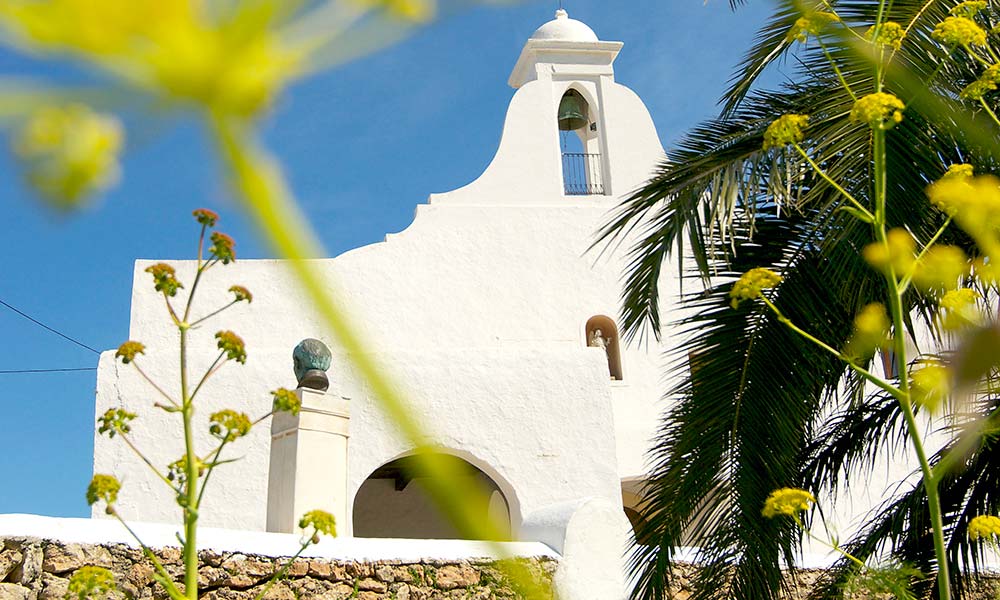
Sant Rafel de sa Creu
Located 8 kilometres away, this Ibiza town is the only one on the island declared an area of artistic interest because of its ceramic tradition. Visit its church to see its characteristic curved bell tower and enjoy an excellent panoramic view over the capital of the island.
Where to eat: Can Pilot is one of the favourite meat restaurants for locals.
Where to shop: You’ll find ceramics in Can Kinoto and other traditional products at the craft market in Sant Rafel (Thursdays, from July to September).
What to see: Less than 3 km away, be amazed by Bibo Park Ibiza Biotechnological Botanical Garden.
Sant Josep de sa Talaia, Sant Rafel de sa Creu, Jesús y Sant Jordi de Ses Salines
During your travels around the island, do not miss the chance to visit the churches of these villages. In Jesús you will find a Gothic altarpiece that is the most valuable work on the island, and in Sant Jordi, the only temple in Ibiza that preserves its parapets.
Jesús
Inside the church of this town located a few kilometres from the city of Ibiza is the Gothic altarpiece of La Mare de Deu, the most valuable work of art on the island: in a late Gothic style, it is composed of 25 tables and was painted in the workshop of Valencian artists Rodrigo and Francisco Osona.
Where to eat: at Bon Lloc, right opposite the church, you’ll find traditional Ibiza dishes.
What to see: Visit Cap Martinet and take a walk overlooking the coast.
Sant Jordi de Ses Salines
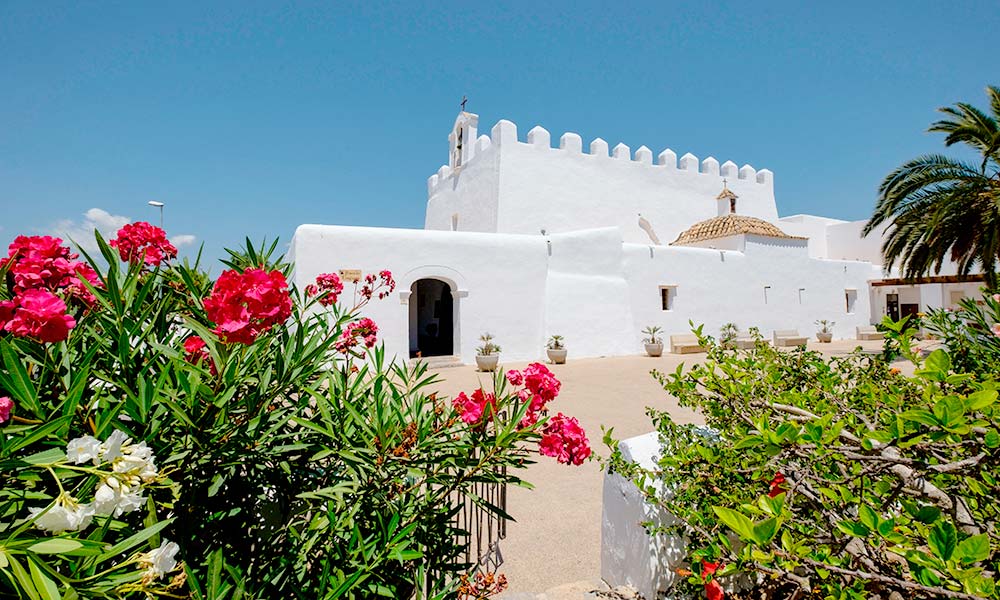
Sant Jordi de Ses Salines
Located near the airport, Bossa beach and Ses Salines beach, this town with a unique local atmosphere is home to the only church in Ibiza with preserved battlements.
Where to eat: The menu at the S’Espardell restaurant, on Bossa beach, includes Ibizan specialities, such as bullit de peix fish stew and squid with sobrasada cured sausage.
Where to shop: If you like flea markets, don’t miss the second-hand market held on Saturday mornings on the site of the old racecourse.
What to see: visit the Interpretation Centre of the Natural Park of Ses Salines and discover the significant ecological value of this area.
Things to see in Sant Josep de sa Talaia and Sant Antoni de Portmany
During your holidays in Ibiza you’ll surely have more than one chance to stop at these two villages located a few minutes’ drive from Cala de Bou. Don’t forget to visit and enjoy their attractions.
Sant Josep de sa Talaia
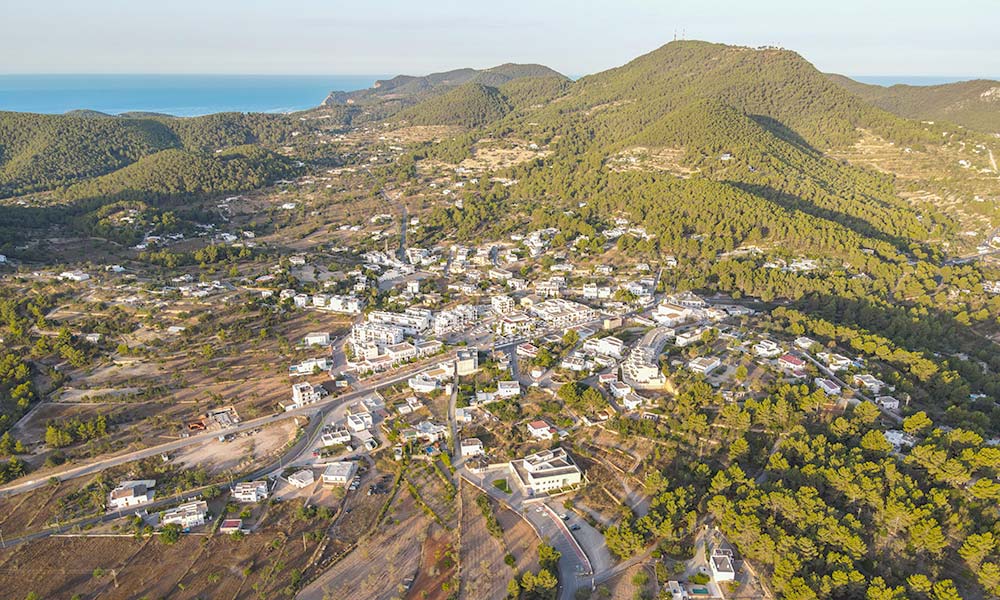
Sant Josep de sa Talaia
Small in size, its urban core has grown in recent decades around its church and road. The church, as in the rest of the villages of the White Island, maintains the characteristic design of popular Ibizan architecture, although it is the only one with a sun clock on the façade.
Where to eat: For traditional Ibizan cuisine, make a reservation at S’Espartar, located less than 4 km from the village.
Where to shop: If you like flea markets, don’t miss the second-hand market held on Saturday mornings on the site of the old racecourse.
Please note: The Can Jeroni Cultural Centre offers a complete annual film and theatre programme.
Sant Antoni de Portmany
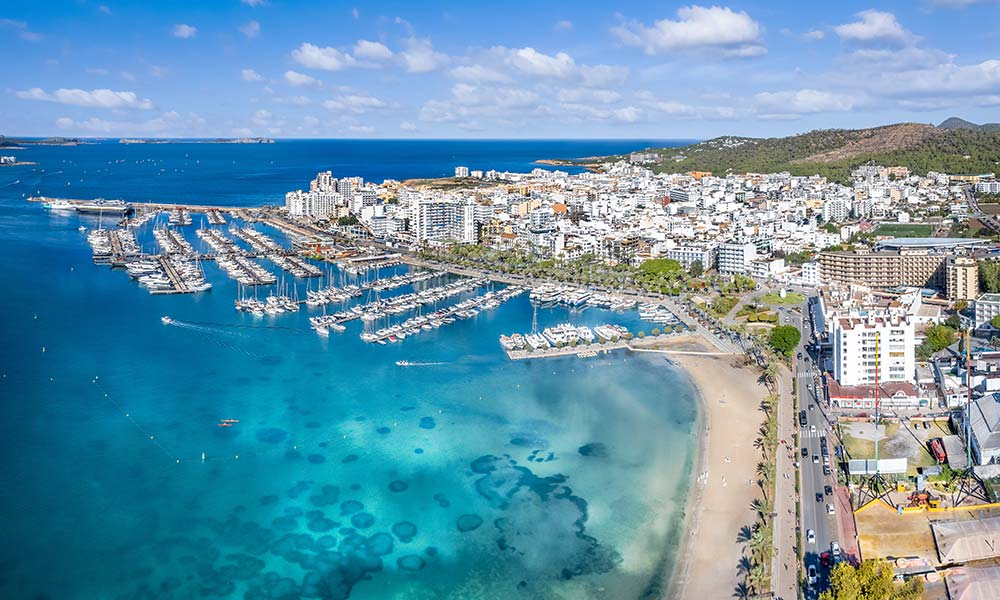
Sant Antoni de Portmany
Located just 4 km from Cala de Bou, this is the largest town of Ibiza after the capital and Santa Eulalia. Its heritage includes its church, an excellent example of a Pityusic church-fortress that preserves its defensive tower. Walk its long promenade, which connects the beach of Es Pouet with Calo des Moro, and sit down to admire the sunset.
Where to eat: for a full Ibizan experience make a reservation at Es Rebost de Can Prats.
Where to shop: find traditional gastronomic produce of Ibiza at the Cooperativa de Sant Antoni (Ibizan herbs, almonds, caleta coffee liqueur, carob chocolate, honey, sweets, etc.)
What to see: Walk up to the chapel of sa Talaia and enjoy a panoramic view of the entire bay.
Please note: exhibitions open to the public are regularly held at the Benjamin Walter Hall (Sa Punta des Moli) and at the former lighthouse of Ses Coves Blanques.
Tips and suggestions for visiting Ibiza’s towns and villages
Exploring Ibiza’s towns and villages is one of the best ways to discover the island beyond its beaches. Whitewashed churches, quiet squares, secondary roads, markets, traditional bars and rural landscapes await just a short distance from some of its best-known coves. To make the most of your route, keep these recommendations in mind.
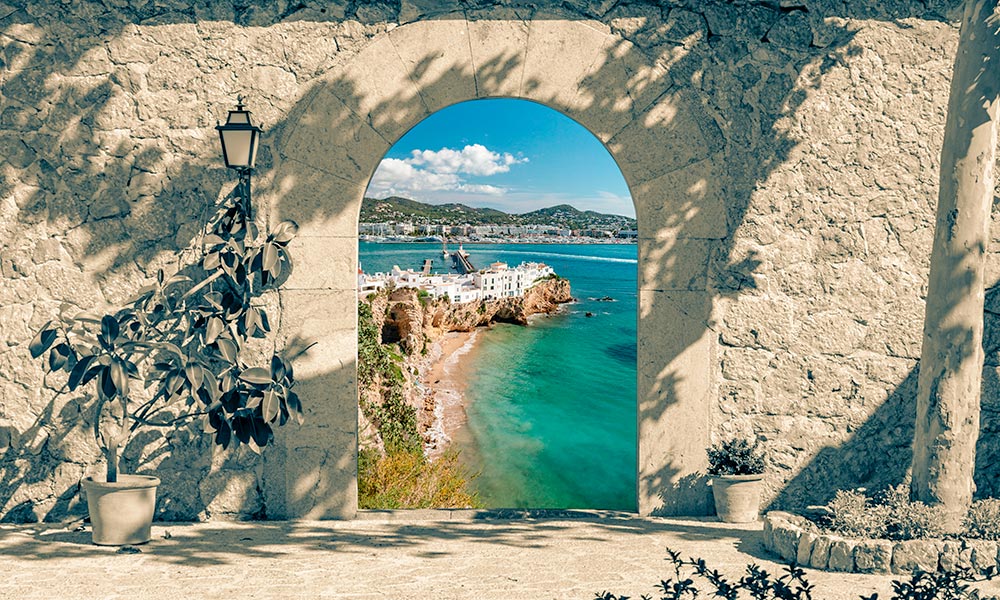
Plan your route by area
Although Ibiza is not a large island, it is a good idea to group your visits by area so you can make better use of the day. You could spend a day in the north, with stops in Sant Joan, Sant Miquel, Sant Mateu or Santa Agnès. Another option is to explore the centre and east of the island, passing through Santa Gertrudis, Sant Carles and Santa Eulària. If you are staying near Cala de Bou or Sant Antoni, Sant Agustí, Sant Josep and Es Cubells are a convenient choice for a half-day trip.
Combine villages, coves and viewpoints
A good way to discover the most authentic side of Ibiza is to alternate inland villages with beaches, coves and nearby viewpoints. You can start the morning by visiting a traditional church, enjoy lunch in a local restaurant and end the day watching the sunset by the sea. Sant Miquel combines very well with Port de Sant Miquel and the Can Marçà Cave, Sant Carles with Las Dalias and the north-east coast, and Es Cubells with some of the coves and viewpoints in the south.
Avoid the hottest hours of the day in summer
During July and August, the heat can be intense, especially in inland villages. The best time to visit is early in the morning or late in the afternoon, when temperatures are more pleasant and the light is better for walking around and taking photos. You will also find a quieter atmosphere, making it easier to enjoy each stop without rushing.
Check opening times before you go
Some markets, churches, restaurants and small shops may change their opening times depending on the season. Before setting off, check the latest information, especially if you are planning to visit a specific place or eat in a traditional restaurant. In high season, it is also advisable to book a table in advance, particularly at the best-known establishments.
Take your time on secondary roads
Part of the charm of Ibiza’s towns and villages lies in the journey itself. Many routes pass through farmland, pine forests, traditional Ibizan country houses and small hills with views. Drive calmly, respect speed limits and bear in mind that some roads are narrow or have bends. If you are travelling by motorbike, always wear a helmet and take sun protection and water with you, especially in summer.
Try the local cuisine
Make the most of your route by trying some of the island’s traditional dishes. Bullit de peix, seafood rice dishes, sofrit pagès, salads made with local produce, Ibizan sobrasada, flaó, greixonera and Ibizan herb liqueur are all part of the experience. In many villages, you will find family-run bars and restaurants where local cuisine is still very much alive.
Leave time to wander
Ibiza’s towns and villages are best enjoyed without following too rigid an itinerary. Walk through their streets, browse their craft shops, stop for a drink on a terrace and take in the small details of traditional architecture. White churches, porches, dry-stone walls and country houses are all part of that slower Ibiza that is well worth discovering.
Respect the surroundings and local life
Many of these villages still have a peaceful, residential atmosphere. Park only in permitted areas, avoid unnecessary noise and respect private spaces. It is also important to look after the natural environment, not leave any rubbish behind and follow the signs on paths, at viewpoints and in protected areas. Travelling slowly also means travelling respectfully.
Visit Ibiza outside high season
If you can choose when to travel, spring and autumn are ideal times to explore Ibiza’s towns and villages. There is less traffic, temperatures are mild and the island reveals a more relaxed side. In winter, especially between January and February, the almond blossom creates one of the most beautiful scenes in the island’s interior, with places such as Santa Agnès de Corona and Pla de Corona making highly recommended stops.
Always carry some cash
Although paying by card is increasingly common, it can be useful to carry some cash for small shops, markets or traditional bars. It will also come in handy if you decide to buy local products, crafts or a souvenir from one of the stalls you come across during your route.
Discover the best coves and beaches in Ibiza
Ibiza clubs and bars: a guide to Ibiza nightlife
The 10 best beach clubs in San Antonio and surroundings
Amàre Beach Hotel Ibiza, one step from the town of Sant Antoni de Portmany
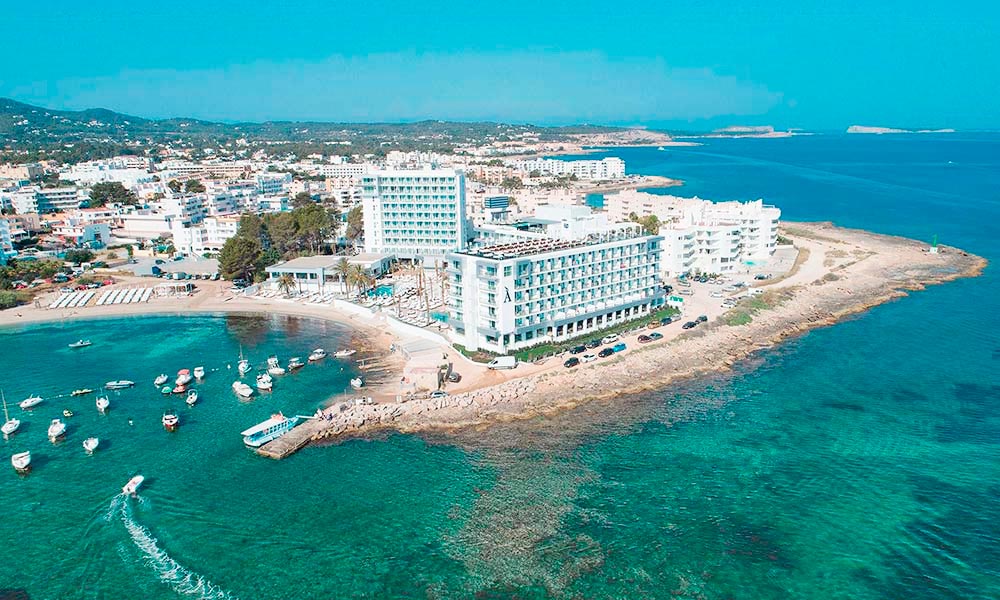
The tourist town of Sant Antoni is located less than 3 miles from Amàre Beach Hotel Ibiza, our 4-star hotel recommended for adults. After a short journey by boat, bus or motorbike, you can discover its church, one of the best examples of an Ibizan fortress-church, or its pretty promenade, and enjoy its terraces or do some of the things we recommended in our article Things to see and do in Ibiza. And after all that activity, our gastronomic and wellbeing proposals await so that you can end the day in a deserving manner: with the best.
Long live the Mediterranean!