


The city of Marbella is home to the most beautiful Mediterranean coast, but this natural beauty is not the only thing that makes up this city. Although Marbella is not best known for its museums, this city has them, holding internationally famous ancient pieces, sculptures and paintings.


MGEC – Museo del Grabado Español Contemporáneo

The Museo del Grabado Español Contemporáneo (Spanish Contemporary Engraving Museum), located in the old Hospital Bazán, in the old quarter of the town, is the first of its kind in our country and one of the few in existence in Europe. Its collection comprises around four thousand prints and has continued to grow thanks to donations from artists, institutions and private individuals. Among them is a unique work by Eduardo Chillida, the only one of its kind held by a museum in Andalusia.

The collections on display, which are renewed periodically from the funds of the institution, offer a rich panorama of engraving in Spain during the twentieth century, from the historical avant-garde – Picasso, Miró and Dalí – to representatives of the different movements and trends that have evolved over the past century. And so, we can find pieces by Palencia, Maruja Mallo or Alberti – founder of the Escuela de Vallecas – or any of the Escuela de Madrid. And next to these, Tapies, Chillida, Antonio Saura, Lucio Muñoz or testimonials given by Genovés, Canogar and Equipo Crónica. Creators of a Hispanic realism – Antonio Lopez, Amalia Avia, Naranjo, and Jose Hernández; sonstructivists and kineticists – Sempere, Palazuelo, Caruncho, Gerardo Rueda, etc.; or others who are difficult to classify and full of significance such as Jose Caballero or Antonio Clavé, and then those whose art has emerged in recent decades, like Gordillo, Alexanco, Barceló, Sicilia, Broto, Capa, Víctor Mira, Campano, etc.
The collection of this museum is completed by the selection of the first medals from the missing National Exhibition of Fine Arts in the engraving section, from Ricardo Baroja to Castro Gil, via Luis Garcia Ochoa.
In short, this is an ideal place to immerse yourself in Spanish contemporary art. If you want to know more, you can become a member of the Asociación de Amigos del Museo del Grabado Español Contemporáneo (Spanish Contemporary Engraving Museum Association of Friends). Members have free access to the museum plus discounts and facilities. And they are the organisers and collaborators of the museum’s events and activities.
Calle Hospital de Bazán s/n, 29601 Marbella, Málaga
Tel: +34 952 76 57 41
Ralli Museum

Open since 2000, this museum devotes its 10 exhibition halls to Latin American and European contemporary art, mostly surrealist. Here you can admire works by artists like Carmen Aldunate (Chile), Herman Braun-Vega (Peru), Alicia Carletti (Argentina) and Eduardo Sarlos (Uruguay) among others, as well as European artists like Miró. The Ralli Museum houses an important collection of Dalí sculptures and other life-size ones by the Mexicans Mario Aguirre and Gerardo Quiroz.
Admission to the museum is free as the Ralli Museums belong to the Harry Recanati Foundation, an organisation dedicated to promoting awareness of works by Latin American artists.
Opening hours: Tuesday to Friday, from 10:00 am to 5:00 pm, and Saturdays, from 10:00 am to 3:00 pm, including public holidays.
Closed on Sundays and Mondays, as well as from 22 December to 31 January.
Admission is free.
Urb. Coral Beach, N-340, km 176, 29602 Marbella, Málaga
Tel.: +34 952 85 79 23
Cortijo Miraflores Cultural Centre

The Cortijo Miraflores Cultural Centre occupies one of the city’s most emblematic buildings. Its history dates back to 1706, when Tomás Francisco Domínguez y Godoy built a country house on the remains of what was then known as Cortijo del Prado de San Francisco. Originally designed as an agricultural estate, it had a sugar mill and later an olive oil mill.
The Fondo Histórico del Archivo Municipal (Historical Municipal Archives) are located here. This documentary heritage of the city is the product and testimony of the many events, decisions and circumstances that have occurred in Marbella’s history. As such, this Archive and its contents are the sum of a process in which the municipality’s and institution’s histories are combined.
Museo del Aceite (Oil Museum)
In the northern part of the building is a complete oil mill powered by hydraulic machinery worked via pulleys, two presses (also hydraulic) in order to obtain the liquid from the pulp, and various containers for decanting oil.
All of this engineering was cast in the second half of the nineteenth century, and they are remarkable reminders of the level of development and social importance of this industry in the province in those years (the machines were made in Málaga and Antequera). The machines have been completely restored in detail.
Also, the rest of the equipment and the space itself have been carefully preserved for display along with various teaching resources (photographs, panels, etc.)
Exhibition of Archaeology
The archaeological exhibition room is located in the oil mill. It consists of seven showcases, three panels, three models and other items. This exhibition presents an overview of the prehistory and history of Marbella from the Lower Paleolithic to the Modern Age.
The pieces on display in the windows follow a sequence except for the first which shows elements from underwater archeology in Roman times. This is complemented by various related pieces placed in outline: Roman amphora, Phoenician stocks, Roman trap, a counterweight and a modern cannonball.
The exhibition is complemented by three explanatory panels and three models that represent the three major sites of the Roman and late Roman: the Roman Villa at Río Verde, the Baths of Guadalmina and the early Christian basilica of Vega del Mar.
Opening hours: check the opening times and available activities before your visit. Admission is free.
Avenida del Trapiche, 10, 29601 Marbella, Málaga
Tel.: +34 952 90 27 14
Municipal Collection of Archaeology in Marbella

In the Plaza Altamirano, at the headquarters of the municipal Department of Culture, housed in a restored sixteenth century building, we find the Municipal Collection of Archaeology, which houses a magnificent exhibition of archaeological finds of Marbella and its surroundings.
These include the Roman Villa of Río Verde, the Early Christian Basilica of Vega del Mar, the Roman baths, the town walls and castle, the watchtowers and the kilns of El Trapiche.
Opening hours: check the opening arrangements before your visit. Admission is free.
Plaza Altamirano, 29601 Marbella, Málaga
Tel: +34 952 77 46 38
The Best Museums in Málaga and the Costa del Sol

If you’re a lover of art and culture, here’s a hand-picked selection of must-visit museums in Málaga and the Costa del Sol. Most are located less than an hour’s drive from Marbella – ideal for a cultural day out during your stay.
Museums in Málaga City
Picasso Museum Málaga
Dedicated to Málaga’s most famous son, this museum showcases an extensive collection spanning all stages of Picasso’s fascinating artistic journey.
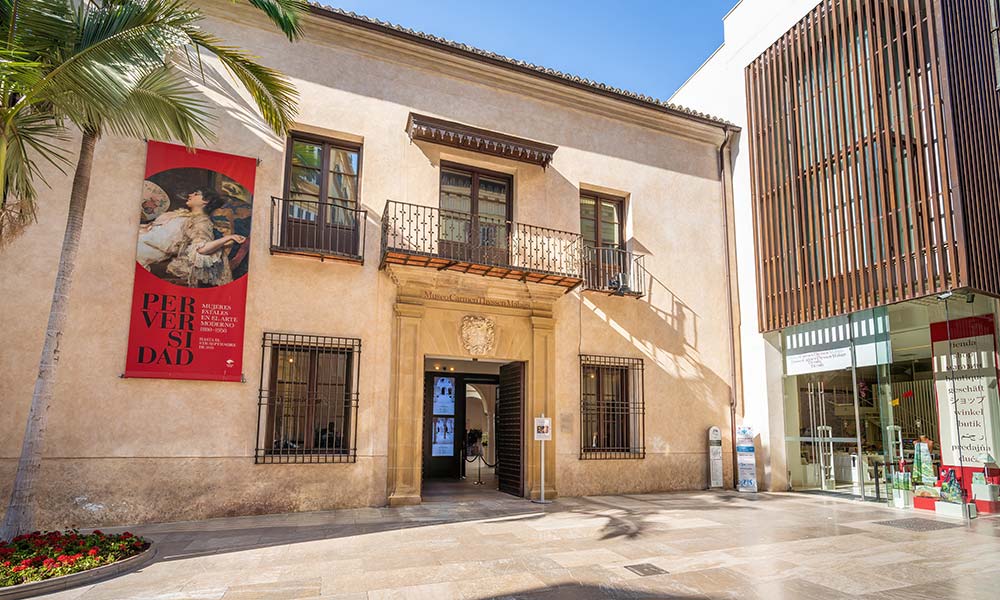
Carmen Thyssen Museum Málaga
Home to an outstanding collection of 19th-century Andalusian painting, with scenes of local life, romantic landscapes and vivid colours.
Centre Pompidou Málaga
The Spanish outpost of the renowned French museum, offering international modern and contemporary art in a bold, colourful setting.
Málaga Museum (Palacio de la Aduana)
One of Spain’s largest museums in its category, combining archaeology and fine arts in an elegant neoclassical building.

Collection of the Russian Museum Málaga
A space dedicated to Russian art that hosts temporary exhibitions featuring works from different periods, ranging from icons and the avant-garde to contemporary art.
Automobile and Fashion Museum
A creative and surprising concept blending classic luxury cars with vintage haute couture in a stylish, photogenic environment.
Glass and Crystal Museum
A charming private collection housed in an 18th-century mansion, with historical glass pieces, antique furniture and decorative arts.
Jorge Rando Museum
Dedicated to expressionism, this museum highlights the work of Málaga-born Jorge Rando and fellow artists from the same artistic movement.

Revello de Toro Museum
Presents the portraits and figurative works of Félix Revello de Toro, located in the former studio-home of sculptor Pedro de Mena.
Interactive Museum of Music (MIMMA)
An engaging, hands-on museum where visitors are encouraged to play instruments from around the world. Great for families.
Málaga Museum of Contemporary Art – MUCAC
The Málaga Museum of Contemporary Art houses a collection of modern and contemporary art and organises temporary exhibitions, educational activities and programmes devoted particularly to artists from Málaga, Andalusia and elsewhere in Spain. Its La Coracha branch occupies the former Municipal Heritage Museum.
Museums on the Costa del Sol (outside Málaga city)

Mijas Contemporary Art Centre (CAC Mijas)
A vibrant space showcasing international contemporary art, including an impressive collection of Picasso ceramics.
Carromato Miniature Museum, Mijas
Tiny but fascinating, this quirky museum houses hundreds of miniatures – including a dressed flea and a Bible written on a pinhead.

Estepona Archaeological Museum
Located in the former Casa del Aljibe, the museum features artefacts from prehistoric times to the Islamic period.
Nerja Museum (Cueva de Nerja Foundation)
Adds historical depth to the famous cave with archaeological discoveries and multimedia exhibits on human evolution in the region.
Vélez-Málaga Contemporary Art Centre (CAC Vélez)
A modern venue for rotating exhibitions of national and international contemporary art.
Practical tips for visiting museums in Marbella and the Costa del Sol
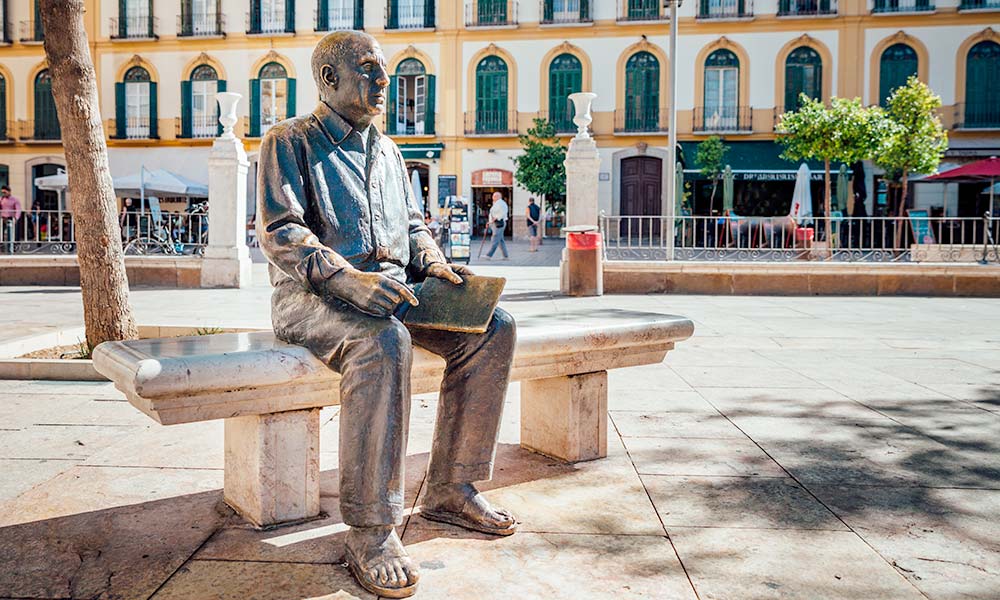
Exploring the museums of Marbella and the Costa del Sol offers a different way to discover the history, art and culture of Málaga province. To help you plan your visit and enjoy the experience at a leisurely pace, take note of these practical tips.
Check the opening times before you set off
Opening days and times may change depending on the season, public holidays or each museum’s programme. Always check the official website before travelling and find out whether advance booking is required.
Check the cultural programme
Many museums regularly update their temporary exhibitions and organise guided tours, workshops and family activities. Checking the programme in advance will help you discover interesting events and exhibitions that aren’t part of the permanent collection.
Group your visits by area
If you’d like to visit several museums in one day, organise them according to their location. In Marbella, you can combine the attractions in the Old Town, while Málaga city centre has numerous museums within easy walking distance of one another.
Plan your journeys carefully
When visiting museums in other towns along the Costa del Sol, consider the distance, traffic and the time needed to park. In Málaga city, it’s often more convenient to leave your car in a public car park and explore the centre on foot.
Check admission prices and discounts
Some museums offer free admission, while others have reduced prices for students, senior visitors, families or groups. They may also offer free admission during certain hours, so check the prices before purchasing your ticket.
Check the accessibility facilities
If you’re travelling with someone with reduced mobility, young children or a pushchair, check in advance whether the museum has step-free access, a lift and any other facilities you may need for a comfortable visit.
Allow enough time for each museum
Avoid trying to fit too many visits into a single day. Exploring at a relaxed pace will help you appreciate the collections and leave time for a stroll through the historic centre, a gastronomic stop or one of the destination’s other cultural activities.
Malaga: a tour of the Costa del Sol city of culture
Where to stay

Marbella is a paradise in which to enjoy the city’s rich cultural, natural, historical, and gastronomic wealth. The options offered by this city are varied and spectacular. The Amàre Beach Hotel Marbella hotel is in the perfect location, on the seafront promenade and just 5 minutes from the historic centre of the city, so you will be in the ideal place to make any of your plans for your getaway to Marbella. It is perfect for adults who want to enjoy a peaceful stay in a unique place where you can relax and be pampered with all the attention you deserve.